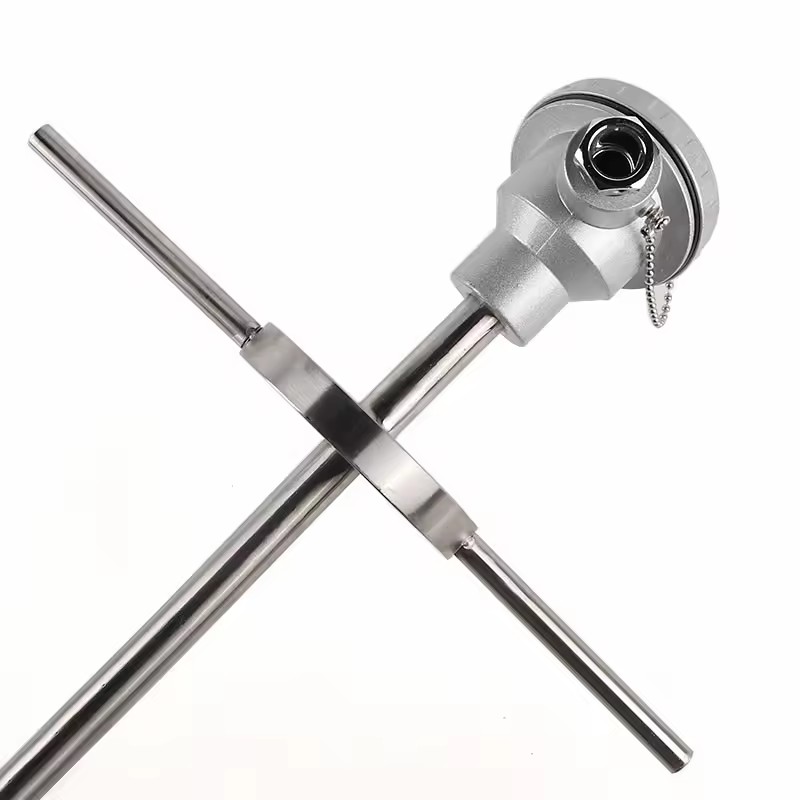
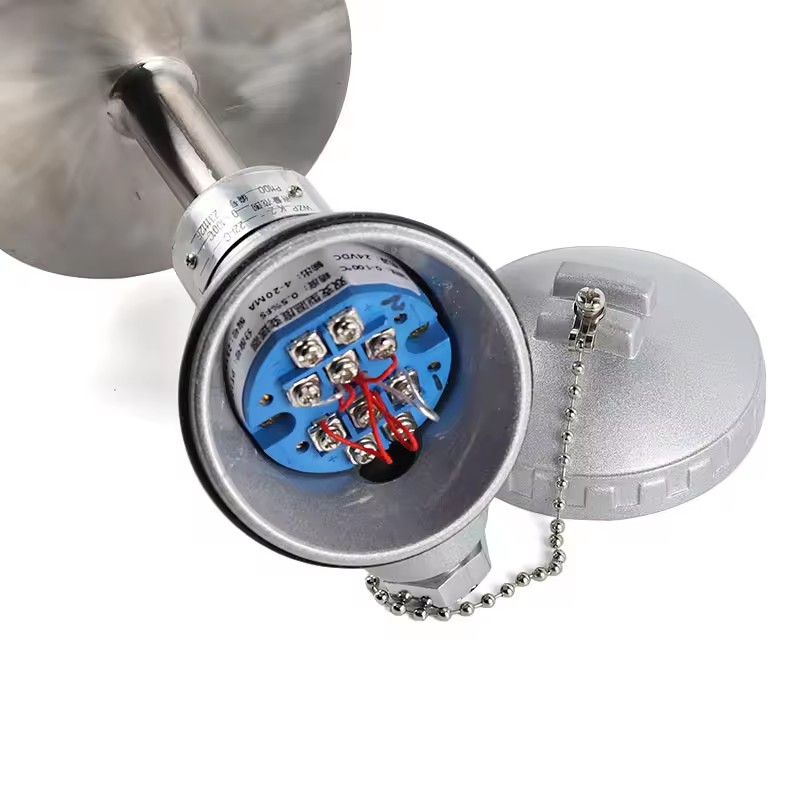
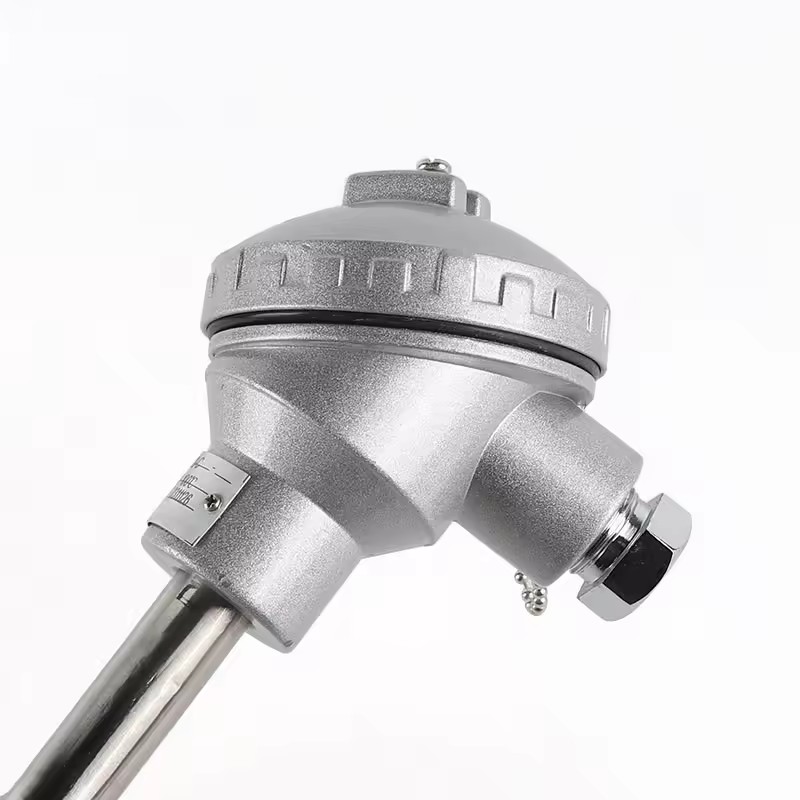
Specification
|
Product Name
|
Temperature Sensor
|
|
Model
|
WZPK-22I-C
|
|
Guard Tube/Base Material
|
Stainless Steel 316L
|
|
Platinum Resistor
|
PT100
|
|
Type
|
Straight insert
|
|
Measurement Range
|
0-100°C
|
|
Output Signal
|
4~20mA*2 channels
|
|
Protection Tube Size
|
Φ16x2
|
|
IP Grade
|
IP66
|
|
Measurement Accuracy
|
±0.5%
|
|
Protective Wall Thickness
|
2mm
|
|
Features
|
Corrosion resistance, high temperature resistance, high measurement accuracy, stable performance.
|
|
Application
|
Used for liquid temperature, gas temperature and other temperature measurement
|
|
Customized Services
|
Yes
|
Thermocouple is a kind of temperature sensing element, is a kind of instrument. It directly measures the temperature and converts the temperature signal into a thermoelectric motive force signal, which is converted into the temperature of the measured medium by an electrical instrument (secondary instrument).
 Working principle
The principle of the thermocouple sensor is based on the Seebeck effect, a thermoelectric effect in which an electromotive force is created at the junction of two different conductors due to temperature differences. When two different conductors or semiconductors A and B form a closed loop, an electromotive force will be generated in the loop if the temperatures of the two contacts are different. The direction and magnitude of this electromotive force depend on the material of the conductor and the temperature of the two contacts. The thermoelectric electromotive force consists of two parts: one is the contact electromotive force of two conductors and the other is the thermoelectromotive force of a single conductor. This effect allows thermocouples to convert thermal energy directly into electrical signals, which can be used to measure temperature.
When the thermocouple measures the temperature, the temperature of the cold end (the measurement end is the hot end, and the end connected to the measurement circuit through the lead is called the cold end) is kept constant, and the size of the thermoelectric potential is proportional to the measurement temperature. If the temperature of the cold end (ambient) changes during measurement, the accuracy of measurement will be seriously affected. At the cold end, certain measures are taken to compensate for the influence caused by the temperature change of the cold end, which is called the cold end compensation of the thermocouple.
The construction requirements of the thermocouple include that the welding of the two thermal electrodes must be strong and that they should be well insulated from each other to prevent short circuits.
Characteristic
The characteristics of thermocouple sensors are as follows:
1、Simple assembly and easy replacement.
2、Pressure spring temperature sensing element, good seismic performance.
3、Large measuring range (-200℃ ~ 1300℃, under special circumstances -270℃ ~ 2800℃).
4、High mechanical strength, good pressure resistance.
5、High temperature resistance up to 2800 degrees.


